
 By trendsnow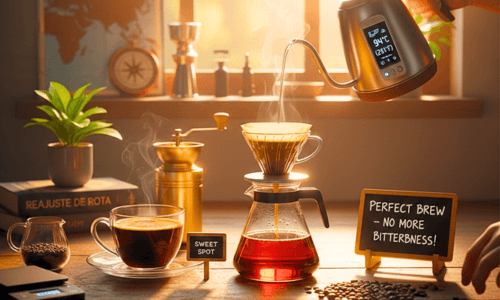
Why your coffee tastes bitter is a question that often arises after you’ve prepared your favorite specialty beans, only to take a sip and find a harsh, mouth-puckering disappointment.
If this has happened to you, know that others share the same experience. Most home brewers face this issue at some point in their journey toward the perfect cup, but understanding the root cause is the first step to fixing it.
Affiliate Disclosure: As an Amazon Associate, I earn from qualifying purchases. This means that if you click on a link and make a purchase, I may receive a small commission at no extra cost to you.
The good news? Bitterness isn’t a flaw in the coffee beans themselves most of the time—it’s usually a sign of over-extraction.
In other words, the water over‑exerted itself, drawing out elements like organic compounds and tannins that were meant to stay behind.
In this comprehensive guide, we will break down the science of extraction and show you exactly how to fix your brew for a smoother, cafe-quality cup in 2026.
The Science of Extraction: Why Your Coffee Tastes Bitter vs. Sour
To fix your coffee, you first need to understand the extraction “spectrum.” When water hits coffee grounds, it extracts flavors in a specific order: first come the fats and acids (sour/bright notes), then the sugars (sweet/balanced notes), and finally the plant fibers and tannins (bitter/dry notes).
If you stop too early, your coffee is under-extracted and tastes sour. If you go too long, it is over-extracted and tastes bitter. Your goal is to hit that “sweet spot” in the middle.
1. Your Grind Size is Too Fine
One of the most common reasons why your coffee tastes bitter is an incorrect grind size. If your coffee grounds are too fine, the water remains in contact with the coffee for too long, leading to over-extraction.
To solve this, you need a consistent grind. Below is a comparison of the best tools on Amazon to achieve the perfect consistency and eliminate bitterness.
Comparison: Top 3 Burr Grinders to Fix Bitter Coffee
| Product | Type | Best For | Amazon Link |
|---|---|---|---|
| JavaPresse Manual | Manual Burr | Budget & Travel | View on Amazon |
| Baratza Encore | Electric Burr | Entry-Level Enthusiast | View on Amazon |
| Fellow Ode Gen 2 | Professional Electric | Serious Home Baristas | View on Amazon |
2. Why Your Coffee Tastes Bitter: Water Temperature: Scorching the Beans
Many people believe that boiling water is best for coffee. However, 100°C (212°F) water is often too aggressive. High heat acts as a catalyst, speeding up the extraction of bitter compounds.
The fix is simple: aim for a temperature between 90°C and 96°C. If you don’t have a thermometer, let your kettle sit for 60 seconds after it finishes boiling. A gooseneck kettle with a built-in thermometer is the tool you need for total control.
3. The “Hidden” Culprit: Water Quality
Coffee is 98% water. If your tap water is “hard” or has high chlorine, it will react chemically with coffee oils to produce a medicinal bitterness.
Using filtered water is a game-changer to unlock the true flavor of your beans. Consider a water filtration pitcher or specialized treatment kits to ensure your water is as high-quality as your beans.
4. Why Your Coffee Tastes Bitter: Brew Time and the “Contact” Factor
The longer the water stays with the coffee, the more it extracts. For a standard pour-over, your brew time should be around 3 to 4 minutes.
If it’s taking much longer, your grind is likely too fine, causing a “clog” that results in bitterness. A digital coffee scale with a built-in timer is essential here to maintain consistency across every single brew.
5. Equipment Hygiene and Old Oils
Coffee contains lipids and oils that turn rancid when exposed to oxygen over time. If you don’t deep-clean your equipment, those old oils will “stain” your fresh brew with a stale, bitter aftertaste.
Make sure to clean your dripper, carafe, and even your grinder burrs regularly to prevent this buildup.
Quick Troubleshooting Table: Bitter vs. Sour
| If your coffee is… | It means it is… | Adjustment needed: |
|---|---|---|
| Bitter / Ashy | Over-extracted | Coarsen grind / Lower Temp |
| Sour / Salty | Under-extracted | Finer grind / Higher Temp |
Don’t Give Up on Your Beans!
When you finally fix why your coffee tastes bitter, you unlock the hidden world of floral, nutty, and chocolatey notes.
Mastering the perfect cup is a journey of small, intentional adjustments. If you’ve adjusted your technique and the bitterness remains, it might be time to look at your hardware.
Having the right gear is the most significant investment you can make for your morning routine.
👉 Explore our curated list of Essential Coffee Brewing Gear on Amazon
Read also:
Why a Bean-to-Cup Coffee Machine is the Best Investment You Will Make in 2026
Mastering Cafécore: How to Build a Professional Home Coffee Station for Under $40 (2026 Guide)